
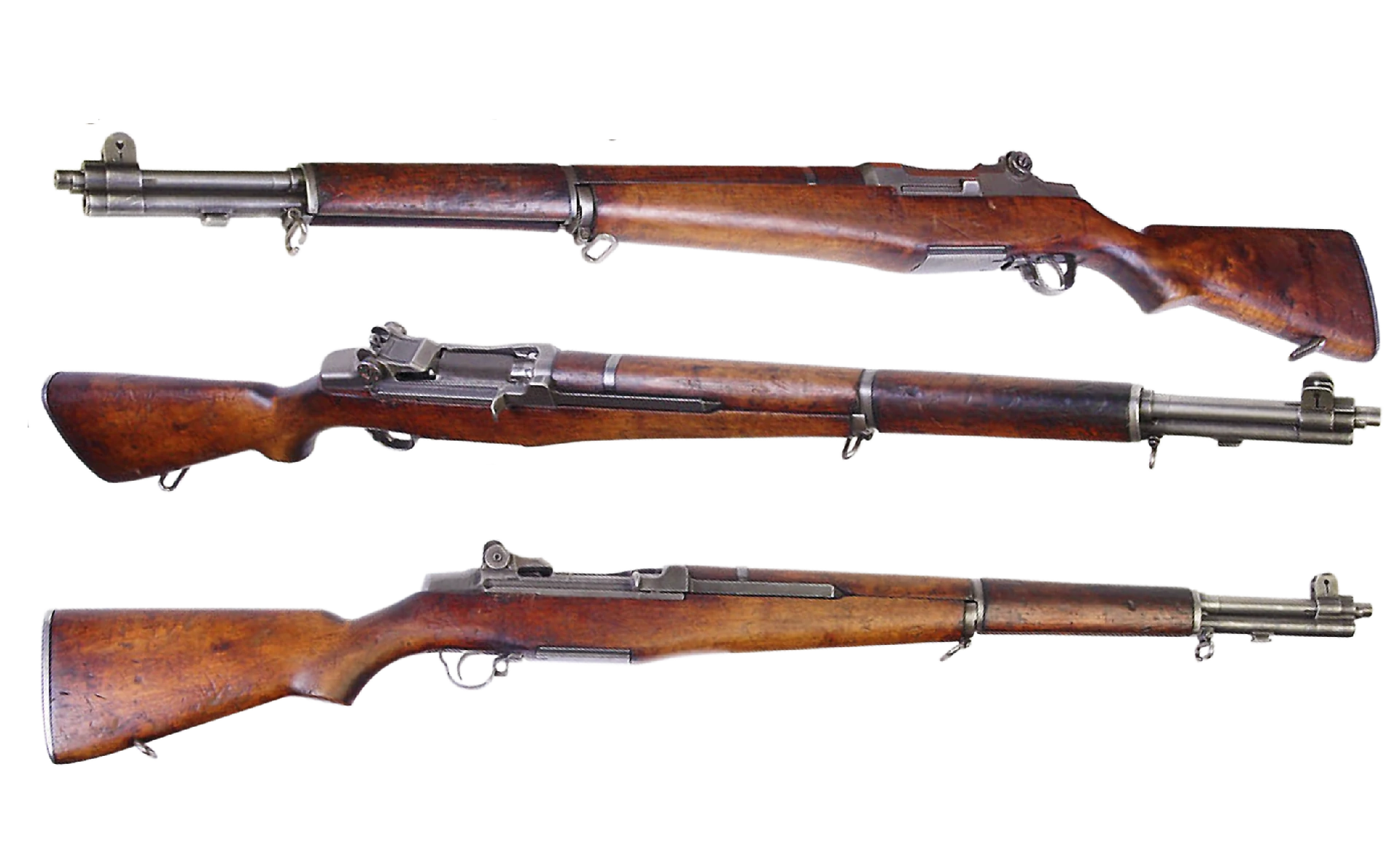
The M1 Garand: The Rifle That Helped Change the Course of History
When the M1 Garand rifle was introduced to the U.S. military in the late 1930s, it marked a revolutionary leap in infantry weaponry. Designed by John Garand, this semi-automatic rifle replaced the slower, bolt-action rifles that had been standard issue in armies worldwide. Its arrival gave American soldiers a decisive edge during World War II, fundamentally changing combat tactics and contributing to the Allied victory against the Axis powers.
A Revolutionary Weapon for a World at War
Before the M1 Garand, most infantrymen relied on bolt-action rifles like the Springfield M1903 or the British Lee-Enfield. These weapons required manual cycling of the bolt after each shot, which limited the rate of fire and exposed soldiers to greater risk in firefights. The Garand’s semi-automatic action allowed soldiers to fire eight powerful .30-06 rounds without having to manually chamber the next round, greatly increasing their firepower.
This technological leap meant American troops could deliver sustained, accurate fire in combat, a vital factor during fast-moving battles where reaction time was critical. General George S. Patton famously called the M1 Garand “the greatest battle implement ever devised.”
Technical Specifications
Caliber: .30-06 Springfield (7.62×63mm)
Action: Gas-operated, semi-automatic
Magazine: 8-round en-bloc clip
Weight: Approximately 9.5 pounds (4.31 kg)
Overall Length: 43.5 inches (1,105 mm)
Effective Range: About 500 yards (460 meters)
Muzzle Velocity: Approx. 2,800 feet per second (850 m/s)
The Crucible of Normandy
One of the most iconic chapters in the M1 Garand’s history was its role in the D-Day invasion on June 6, 1944. As Allied forces launched the largest amphibious assault in history, thousands of soldiers stormed the beaches of Normandy under intense enemy fire. The M1 Garand was the rifle of choice for many of these men, giving them the firepower needed to suppress enemy machine guns and bunkers.
In the muddy, chaotic fields of Normandy, the Garand proved its worth time and again. Its reliability under harsh conditions meant it rarely jammed despite the dirt, rain, and gunpowder fouling. Soldiers could trust that their rifle would fire when needed most — a factor that helped tilt the brutal battle in favor of the Allies.
A Soldier’s Story: Lt. Winters and His Lost Rifle
In “Band of Brothers,” Lt. Richard Winters describes the harrowing experience of his parachute jump into Normandy. He recalls how the force of the jump tore much of his gear, including his rifle, away. That rifle was an M1 Garand — a weapon trusted and relied upon by soldiers like Winters, even as war tore their equipment apart. This personal story underscores the rifle’s central role in the lives of the men who fought fascism and Nazism on the front lines.
But Winters was lucky. He came across a destroyed wagon, and underneath the seat, he found another M1!
Reliability and Ease of Maintenance
Beyond the battlefield, soldiers and armorers praised the M1 Garand for its durability and ease of maintenance. The rifle’s design allowed for straightforward disassembly and cleaning, which was critical for soldiers often operating in difficult environments. Unlike some European rifles of the era, the Garand’s parts were robust, and its gas-operated mechanism was relatively resistant to fouling.
Troops often remarked that even after hours of marching through mud or exposure to rain, the M1 would continue to function reliably with minimal cleaning. This dependability was a morale booster and contributed to the rifle’s legendary reputation among the troops.
The Journey from Battlefield to Barracks: The Danish Connection
After World War II, the United States had millions of surplus M1 Garands. Many were retained in U.S. service, but a large number were also distributed to allied nations as part of military aid programs and NATO partnerships. Denmark was one such country that received batches of these rifles to equip and train its military forces during the Cold War.
The Garands supplied to Denmark likely came through a complex post-war redistribution process. Some rifles were original U.S. productions, while others had been refurbished or partially rebuilt overseas, including Italy where Beretta and Breda factories serviced and rebuilt many M1s. This explains why some Danish troops trained with rifles bearing original U.S. serial numbers and markings, while others carried versions with Italian parts or serials.
Imagining the journey of these rifles—from the assembly lines of Springfield Armory to the battlefields of Europe, then refurbished in Italy, and finally issued to soldiers training in Denmark—is a vivid reminder of how military equipment can span continents and generations.
Wars Fought and the Enduring Legacy
The M1 Garand’s service life extended beyond World War II into the Korean War, where it again proved vital in harsh terrain and bitter cold. It remained the standard U.S. infantry rifle until the introduction of the M14 in the late 1950s. Even then, many units continued to rely on the Garand due to its proven effectiveness.
In Denmark and other allied nations, the M1 Garand was primarily a training weapon, preparing soldiers for a potential conflict during tense Cold War years. Its robust design and reliability made it ideal for teaching marksmanship and weapon handling.
The Garand’s impact goes beyond the wars it fought; it symbolizes the technological innovation and industrial strength that helped the Allies prevail in some of the most challenging conflicts in history.
Honorable Retirement: Ceremonial Status and Continued Respect
Though the M1 Garand is no longer standard issue, its legacy endures in ceremonial roles around the world. In the United States and many allied countries, the rifle is still used by honor guards, military ceremonies, and historical reenactments. Its distinctive “ping” sound when ejecting the en-bloc clip is instantly recognizable and evokes deep respect.
This ceremonial role is a fitting tribute to a rifle that served with distinction for decades. The Garand’s continued presence in parades and formal events symbolizes the honor and sacrifice of the soldiers who carried it and the values it defended.
In retirement, the M1 Garand has achieved a place of honor—not just as a weapon, but as a historic icon representing courage, innovation, and the enduring fight for freedom.
References & Further Reading
Bruce N. Canfield, The M1 Garand Rifle
John C. Garand, The First American Semi-Automatic Rifle
Stephen Bull, The World War II GI: US Infantryman 1941-45
Band of Brothers (HBO series) — based on Stephen Ambrose’s book
Springfield Armory Museum official website